In a world filled with overstimulation, clutter, and constant noise, your home should be more than just a space—it should be your sanctuary. That’s where Japandi style comes in: a thoughtful fusion of Japanese wabi-sabi minimalism and Scandinavian warmth, designed to soothe the senses and support your well-being.
Let’s explore how you can embrace Japandi in your own home—visually, emotionally, and functionally—with curated inspiration and pieces that reflect harmony, texture, and intentional simplicity.
What Is Japandi and Why Does It Feel So Peaceful?
Japandi brings together two philosophies:
- Wabi-Sabi (Japan): The beauty of imperfection, simplicity, and nature.
- Hygge (Scandinavia): Comfort, coziness, and warmth in everyday life.
Together, they create a balanced, grounded space that reduces anxiety and invites mindfulness. Neutral colors, organic textures, natural light, and spacious layouts make Japandi homes feel open, breathable, and emotionally safe.
Curating a Japandi Living Room
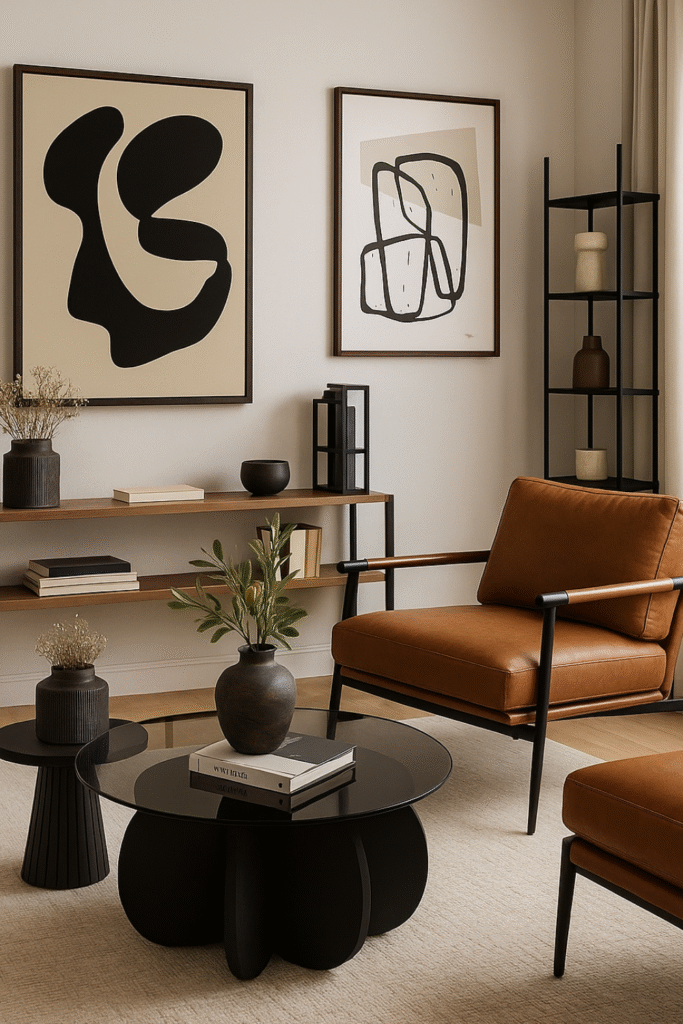
Japandi is not about filling your space with more, but choosing less, better. Here’s how to build a Japandi-inspired room step by step:
1. Start With Abstract, Organic-Inspired Wall Art
Japandi interiors rely on neutral yet expressive artwork to bring energy into the room without overwhelming the senses. Look for earth tones, soft black lines, and asymmetrical balance.
Here are a few perfect options:
Kate and Laurel “Entangled” Canvas – a fluid, organic piece that feels both modern and grounded.
→ View artwork
Apricot & Birch Abstract Wall Art – with minimal color but maximum emotion, perfect for Japandi walls.
→ See this abstract print
Set of 2 Black and Beige Modern Prints – large-format, great for over a couch or console.
→ Modern print set here
Japandi Triptych Set (12×16) – soft, muted, and architectural.
→ Triptych set here
Tip: Keep framing consistent (wood or black), and leave plenty of white space around each piece.
2. Choose Low, Clean-Lined Furniture
Japandi interiors are known for their low-profile silhouettes and sturdy, grounded shapes.
- This mid-century brown leather accent chair offers structure and softness.
- → Accent chair link
- Pair it with a round black coffee table with a sculptural base to maintain balance and flow.
- → Black coffee table here
These pieces are ideal for creating a layout that’s open yet defined. The tactile materials—wood, leather, glass—support the natural-meets-modern mood.
3. Layer In Ceramic & Terracotta Decor
Texture is everything in Japandi spaces. Use a mix of raw and glazed ceramics to bring softness and depth.
- Rustic Ceramic Vase (ZSHLXM) – perfect for dried grasses or branches.
- → Rustic vase here
- SIDUCAL Terracotta Pot – adds grounding color and subtle texture.
- → Terracotta pot here
Let these pieces sit solo on shelves, side tables, or consoles. Remember: negative space is sacred.
4. Add a Tall, Open Shelf for Balance
Shelving is important in Japandi interiors—not to fill up, but to display with intention.
- HSH 5-Tier Black Bookshelf combines black steel with wood for the perfect industrial-organic balance.
- → Black bookshelf here
- You can also try this alternative:
- Spatial Order Black Mango Wood Side Table for a compact option that still fits the aesthetic.
- → Side table option
Decorate with:
- Stacked neutral books
- 1-2 ceramic objects
- A single, trailing plant
- Empty space
5. Stick to a Soft, Earthy Color Palette
Use colors inspired by nature and muted tones:
- Warm beige
- Charcoal black
- Soft ivory
- Olive green
- Clay tones
These colors are beautifully illustrated in Sanzo Wada’s historical palette work, and can help you choose textiles and accessories with confidence.
If you want a deeper dive into harmonious tones, this book is a gem:
A Dictionary of Color Combinations, Vol.1 by Sanzo Wada https://amzn.to/3Kj2Dxd
“This book offers 348 color combinations, as attractive and sensuous as the book’s own design.”
Japandi is not a trend—it’s a mindset. It’s about slowing down, letting your home breathe, and curating a space that brings you peace, presence, and clarity.
You don’t need to overfill a room to make it feel alive. Instead, invite stillness in. Let each piece matter. Let the space speak quietly.
This post may contain affiliate links. This means I may earn a small commission if you purchase through the links, at no extra cost to you. I only recommend what I genuinely love and use.